Curing The System
The Hidden Health Struggles of Refugees
Many refugees face significant challenges when accessing healthcare services upon arriving in the United Kingdom. The language barrier is the most prominent obstacle, making it difficult to book appointments, communicate with doctors, and understand health rights. Additionally, the complexity of the digital healthcare system hinders many refugees from accessing the medical care they need.
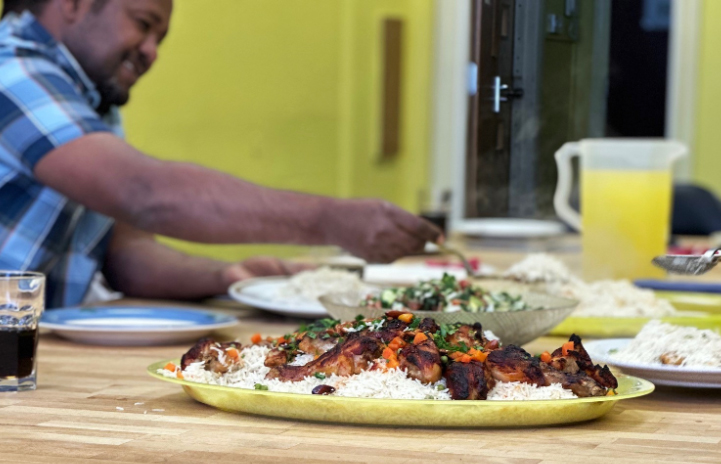
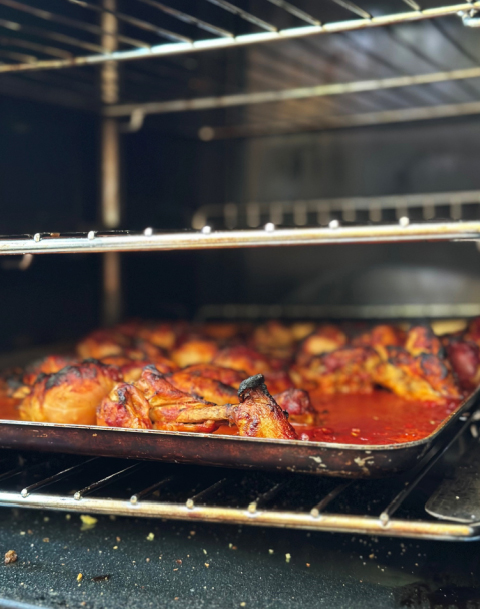
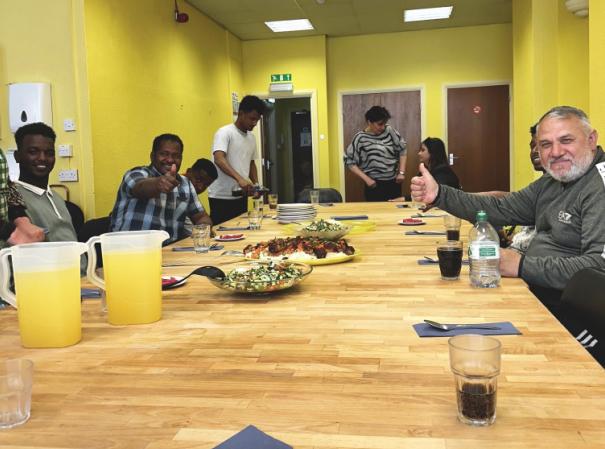
To delve deeper into these issues, we organised a discussion session attended by refugees and representatives from the National Health Service (NHS), supported by Central Liverpool Primary Care Network. We sat down to share food and thoughts, and through this dialogue, we aimed to directly understand the challenges and propose practical solutions.
We sought to create a safe space where refugees could share their experiences, understand their health rights, and receive answers to their questions. We believe that every refugee has the right to fair healthcare, to have their issues heard, and to advocate for improvements in the services they receive.
Thanks to: Aida Al Jaber, Anne Marie Morrison, Georgie, Hosny Omar, Martha Lomeli, Mervat, Nemeh Al Zouabi, Samer Al Zouabi, Rosie Duffy and Tigiste Mehari
Our reporters during these sessions provide their reviews…
Lost and Unheard
Esam Al Zouabi
Many refugees arrive with high hopes. After risking everything—leaving behind their families, friends, and homeland—they believe they are stepping into a better future. They dream of safety, education, and healthcare.
Reality hits hard.
Take healthcare. One of the most frustrating experiences for new arrivals is the endless waiting lists. Some spend months, even years, waiting for medical attention.
While the headlines focus on policies and statistics, the day-to-day struggles these individuals face often go unnoticed.
“I thought I would finally be safe here, but when I got sick, I had nowhere to go. I have been trying to register with a GP for more than a year, and every clinic I have been to has turned me away.”
The language barrier can itself be life-threatening. Not speaking English is more than just an inconvenience—it is dangerous. One person told me about breaking his leg while playing football. His friends called for an ambulance, but it took over 12 hours to arrive because they struggled to explain what had happened.
I called an ambulance but they couldn’t understand
Another woman recalled a terrifying night when her child had a dangerously high fever. She ran to a neighbour’s house in tears, trying to get help.
“I was crying, telling them my child was going to die. I called for an ambulance, but they could not understand me. My neighbour had to explain the situation for me.”
Even then, the ambulance took two hours to arrive. These delays can cost lives. Many refugees face emergencies but struggle to explain their situation due to a lack of interpreters.
Despite coming from different countries—some with high risks of infectious diseases—many people told me that no one performed a full health check when they arrived.
Vaccinations are another issue. Many avoid them not because they are against them, but because they simply do not understand what they are for. No one explains the benefits, and information is rarely available in translation.
For Muslim refugees, uncertainty about whether vaccines are halal adds to their hesitation. Many said they would feel more comfortable if this was clarified.
many don’t know they have no medical care until it’s too late
GP Registration—Where Do You Even Start? In many refugees’ home countries, the healthcare system works differently. When they arrive here, they do not even know what a GP is, let alone that they need to register with one.
Without guidance, many remain unregistered and do not realise they have no access to medical care until it is too late.
Finding a Dentist? Almost Impossible. If seeing a GP is difficult, getting a dentist is even worse. One refugee told me he had been trying for months to find one, without success. In the UK, NHS dental appointments are already hard to get, but for refugees who do not even know where to look, it is nearly impossible.
For refugees staying in hotels on arrival, food is another challenge. One man I spoke to has high cholesterol, but no one asks about dietary needs.
“They put too much oil in the food, and they do not ask if we have allergies or health conditions. This could be dangerous for me—or even fatal.”
For many, it is not just about food preferences—it is a matter of health and survival.
These are just a few of the struggles that refugees face—problems that rarely make the news. From language barriers to healthcare confusion, their journey does not end when they arrive. In many ways, it is just beginning.
If we genuinely want to support refugees, we need to bridge these gaps. That means better communication, clearer guidance, and more accessible healthcare. Until then, many will continue to feel lost, unheard, and at risk.

Choosing Silence
By Alaa Al Zouabi
Many refugees face daily health challenges but hesitate to express them, either due to fear of consequences or because they don’t believe their voices are heard. Some live in difficult circumstances but choose silence out of fear that speaking out might impact their legal status in the country.
Lack of Awareness About Health Rights
During the discussion, it became clear that many refugees are unaware of their rights within the UK healthcare system, such as the option to request a medical interpreter during appointments. This lack of awareness leads to misunderstandings and the inability to convey health problems accurately, negatively impacting the quality of care they receive.
Difficulty Booking Medical Appointments
The appointment booking system at most healthcare centres relies on electronic apps and websites, which presents a barrier for refugees who may not own smartphones or may struggle with technology. This makes them more susceptible to delays in diagnosis and treatment, which could lead to deteriorating health conditions.
Delayed Emergency Services
One of the most concerning topics raised during the discussion was the delay in ambulance arrivals. Some refugees reported experiences where ambulances never arrived, even in critical situations. When ambulances did respond, many complex questions were posed, adding to the confusion, especially for those who do not speak English fluently.
Unclear Medical Text Messages
Patients receive text messages from the NHS with important instructions, but many refugees find them unclear or unavailable in their native language. Some messages contain links for translation, but this solution is ineffective, especially for the elderly, who may struggle to use such technologies.
Lack of Follow-Up Care and Delayed Diagnosis
A significant number of refugees reported not receiving follow-up care after medical tests. In some cases, patients were not informed of their test results until their health worsened, reflecting a breakdown in communication and follow-up care.
Unsettling Communication from Doctors
It was observed that some refugees find the communication style of British doctors different from what they are used to in their home countries. In some cultures, doctors tend to simplify information and reassure patients, while in the UK healthcare system, all details, including the worst-case scenarios, are provided, which can cause unnecessary anxiety for patients with no prior experience of this approach.
Disparities in Medical Screenings and Vaccination
While some refugees reported receiving comprehensive medical screenings upon arrival in the UK, others did not receive any health assessments. Additionally, there is a disparity in vaccination provision, with more attention given to children, while adults may not receive sufficient information about the vaccines they need.
Where can changes be made?
Based on the discussions, several steps could be taken to improve refugees’ experiences within the healthcare system, including:
Providing introductory sessions when refugees register for health services to explain how to book appointments and use digital services.
Issuing translated booklets that explain refugees’ patient rights and the available translation services.
Improving the clarity of medical text messages by offering direct translations without the need for external links.
Ensuring comprehensive medical screenings for all refugees upon their arrival, not just specific groups.
Raising awareness about available vaccinations, particularly among parents who may have concerns about the ingredients in some vaccines.
Developing support programs for refugee doctors seeking accreditation to practice in the UK, helping to alleviate the shortage of healthcare staff.
Providing guidance programs for refugee students interested in studying medicine, given the challenges they face in university admissions.
The proposed improvements will not only benefit refugees but also enhance the overall efficiency of the healthcare system. Through simple measures such as improving translation, ensuring information clarity, and raising awareness about patient rights, the NHS can become more inclusive and equitable, contributing to building a healthier community for all.